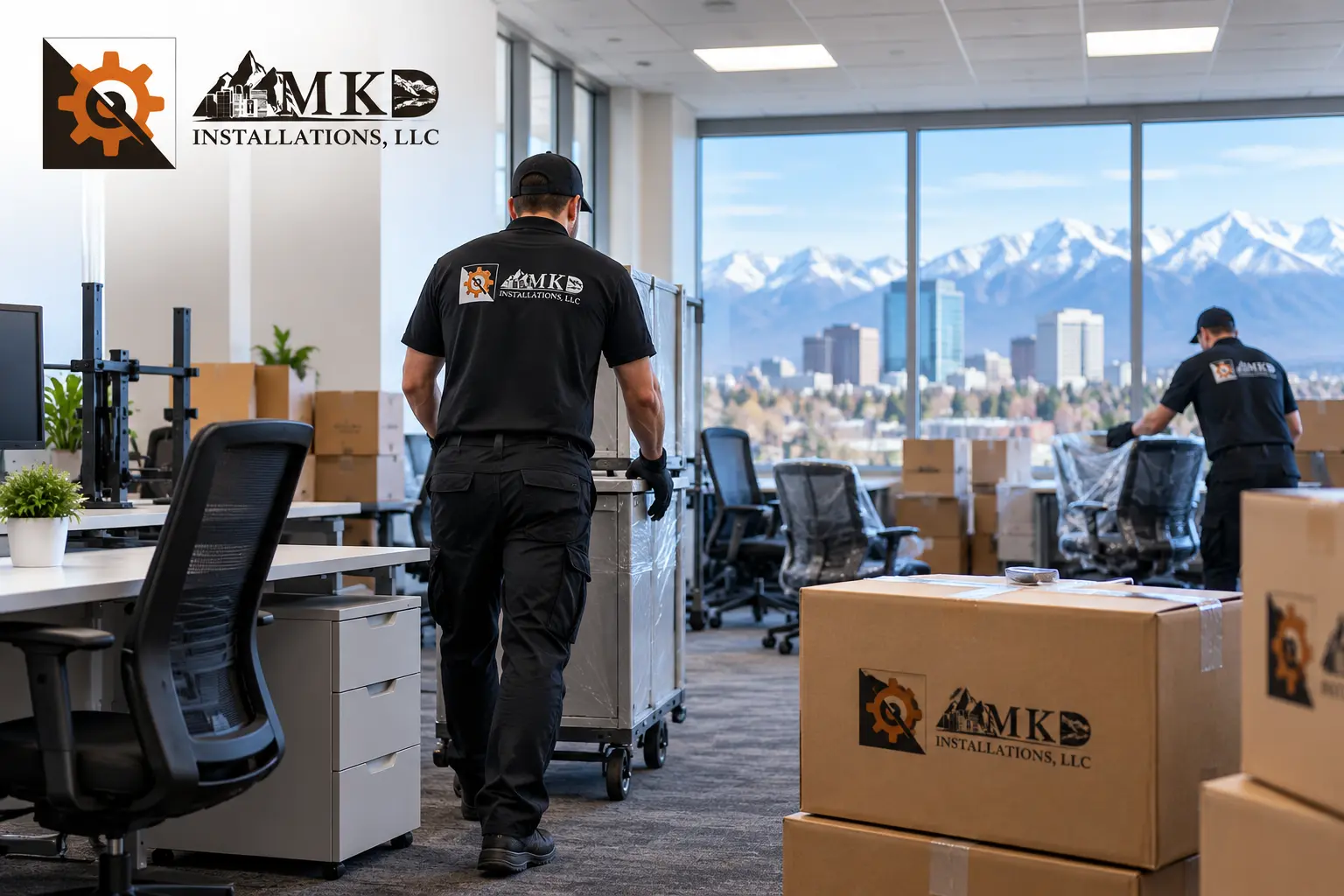
A practical reduce office moving downtime Anchorage strategy can help businesses maintain productivity while employees, furniture, equipment and technology are being relocated. Without a clear plan, an office move can interrupt daily operations, especially when workstations are hard to identify, IT equipment is not prepared or building access has not been confirmed.
The objective is not to complete the move as quickly as possible, but to organize each stage so essential business functions can continue while other areas are transported and set up.
For Anchorage businesses, effective planning should consider building access, loading zones, delivery schedules and seasonal conditions. It should also include clear labeling, early IT coordination, furniture placement and consistent communication among employees, building management and moving professionals.
MKD Installations’ published services include commercial and residential moving, office installation, design configuration, disassembly and removal. MKD also describes project management assistance and coordination of receiving, delivery and installation schedules through final cleanup and punch-list work.
Here are practical ways to make an office relocation more organized while limiting disruption to daily operations.
Plan the Move in Phases
Moving an entire office at once is not always the best approach. A phased relocation can allow a business to keep essential areas operating while other parts of the workspace are being moved or prepared.
A phased office move Anchorage businesses can use might involve moving nonessential furniture first, followed by storage areas, individual departments or workstations. The right
sequence depends on the company’s workflow, the new office layout and which functions need to remain operational.
Start by identifying the departments and activities that are most difficult to take offline. Customer-facing teams, accounting, administration, sales and IT may have different requirements.
Then determine what can be relocated first and what needs to remain available until later.
Phasing can also apply to workspace installation. MKD states that customized workspace projects can be completed in stages, allowing different areas to be addressed when most convenient for the workplace. Its design configuration service also includes detailed floorplans and planning for workspace changes.
The objective is to create a sequence rather than trying to accomplish every task simultaneously.
Label Furniture, Boxes and Workstations Clearly
One of the simplest ways to reduce moving-day confusion is to label everything before it leaves the current office.
Every box, workstation component and major piece of furniture should have a clear destination. Labels might include the employee’s name, department, room number or workstation location.
Use the same identification system on the new office floor plan. For example, if a workstation is labeled “Accounting 04,” its destination on the floor plan should use the same identifier.
This approach helps the people handling the relocation understand where items belong without repeatedly asking employees for directions. It also reduces the risk of placing furniture in the wrong room and having to move it again.
Create a short list of items that need special handling. Large furniture, equipment, modular systems and other components may require disassembly or additional coordination before they can be moved.
Before the relocation begins, give the final labeling system and floor plan to everyone who needs them. A shared reference can make communication much easier when several people are involved.
For businesses planning commercial moving Anchorage, the labeling process should be treated as part of the move itself rather than something employees figure out after the furniture arrives.
Coordinate IT Before Moving Day
Technology is often one of the biggest sources of potential downtime during an office relocation.
Computers, phones, networking equipment, printers and other technology should be included in the moving plan from the beginning. Waiting until moving day to determine what needs to be disconnected or reconnected can delay employees from returning to normal work.
Start by identifying technology that must remain operational throughout the transition. Then work with your internal IT team or technology provider to determine:
- Which equipment needs to be disconnected
- Which equipment can be moved without extended downtime
- Where each device will be located
- When equipment should be reconnected
- Which systems need to be tested before employees return
If the new workspace requires cabling or cable management as part of the setup, include those requirements in the overall plan. MKD’s published office installation services include cable management and IT cabling.
The key is sequencing. Furniture placement, technology installation and employee occupancy should not be treated as completely separate projects when they affect the same work area.
Confirm Building Access and Scheduling
A carefully planned move can still lose time if the building is not prepared to receive furniture and equipment.
Before moving day, confirm access requirements at both the old and new locations. Ask building management about entrances, loading areas, elevators, parking and any procedures that apply to moving furniture or equipment.
Anchorage weather should also be considered when planning access to outdoor loading areas. Snow and ice can affect paths between vehicles and building entrances, so local conditions should be part of the logistical discussion.
Scheduling is another important consideration. Some businesses may consider moving outside their normal operating hours to reduce disruption. However, do not assume that after-hours
office movers Anchorage businesses may be considering are automatically available. After-hours work should only be included in the plan if the moving provider and building have confirmed that schedule.
MKD’s published information specifically describes flexibility around workplace schedules for design configuration projects, but its current service information does not state that after-hours moving is a standard offering.
If an after-hours schedule is not appropriate or available, a phased move can provide another way to limit disruption. The best schedule is the one that fits the business’s operating needs, building requirements and relocation sequence.
Coordinate the Move From One Shared Plan
Strong business relocation planning Anchorage businesses can use should give everyone the same information.
Create one central relocation plan that includes:
- Moving dates and planned stages
- Department and workstation assignments
- Floor plans
- Box and furniture labels
- Building access information
- IT coordination details
- Delivery requirements
- Installation requirements
- Primary project contacts
- Outstanding tasks
Assign responsibility for each major task. One person might coordinate building access, another may work with IT, and another may oversee furniture placement and installation.
This type of office move coordination Anchorage businesses need can prevent employees, building representatives and service providers from working from different instructions.
MKD describes its project management assistance as helping simplify coordination and states that its process can include developing receiving, delivery and installation schedules through final cleanup and punch-list work.
MKD also provides moving services and office installation, so businesses can consider how transportation and workspace setup fit together when planning the relocation.
The more clearly responsibilities are assigned before moving day, the less time employees need to spend solving logistical problems during the transition.
Final Checklist for Reducing Office Downtime
Before the move begins, review these questions:
- Have departments been assigned a moving sequence?
- Are boxes and furniture clearly labeled?
- Does the new floor plan match the labeling system?
- Has essential IT equipment been identified?
- Has IT reconnection been planned?
- Has building access been confirmed?
- Are loading and delivery arrangements understood?
- Does everyone know the primary project contacts?
- Have furniture installation requirements been identified?
- Has the schedule been reviewed for potential business disruption?
- Have remaining tasks been assigned to specific people?
- Is there a plan for checking the new workspace before employees return?
If the relocation also involves office reconfiguration Anchorage businesses may need, include those changes in the same project plan. MKD’s design configuration service addresses workspace reconfiguration and can include planning, floorplans and staged work intended to minimize disruption to operations.
A clear reduce office moving downtime Anchorage businesses can use is ultimately about preparation. The fewer decisions employees need to make during the physical move, the more attention they can keep on their normal responsibilities.
Frequently Asked Questions
What is the best way to reduce downtime during an office move?
Start by identifying essential business functions and planning the relocation around them. Phased moving, clear labeling, early IT coordination, confirmed building access and a detailed floor plan can help keep the transition organized.
Is a phased office move better than moving everything at once?
It can be useful when a business cannot easily stop all operations at the same time. Different departments or areas can be addressed in stages, depending on the company’s workflow and the layout of the new office.
When should IT planning begin?
IT planning should begin well before moving day. Identify equipment that needs to be disconnected, moved, reconnected and tested, then coordinate the sequence with the people responsible for those systems.
Should a business schedule an office move after hours?
It depends on the provider, building requirements and project needs. After-hours moving should never be assumed. Confirm the available schedule with the provider and building before making it part of the relocation plan.
Keep Your Office Move on Track
Reducing downtime starts with decisions made before the physical move begins. A phased plan, consistent labeling, early IT coordination, confirmed building access and clear responsibilities can help an Anchorage business transition into a new workspace with less disruption.
MKD Installations provides moving and office installation services and describes project coordination covering receiving, delivery, installation and final project cleanup.
If you are planning a commercial office relocation, request a quote from MKD Installations and provide the details of your project so the moving, delivery and workspace requirements can be discussed.